

Ashley Jane Lewis
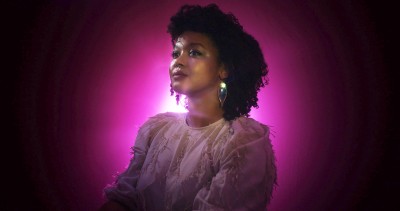
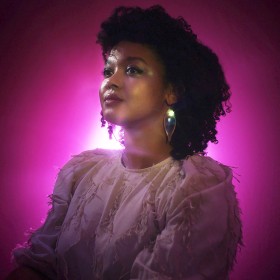
Ashley Jane Lewis is a new media artist and creative technologist with a focus on bio art, interactivity, social justice, science fiction and speculative design. She holds a BFA in New Media Art from Toronto Metropolitan University and Master’s Degree from ITP at New York University’s Tisch School of the Arts.
Ashley explores Black cultures of the past, present and future through computational and analog mediums including coding, electronics, writing, textiles, performance and fabrication. Her science-driven work incorporates slime mold, mycelium and other bio matter to explore ways of decentralizing humans to imagine collective multispecies liberation and survival. Listed in the Top 100 Black Women to Watch in Canada, she has exhibited across North America. Ashley was featured by Google in a series of mini documentaries profiling high impact Black Women Techmakers. With over a million views, this Webby Award winning series shows the diversity of socially driven practices in technology.
Ashley is currently pursuing a practice based research Postdoctoral Fellowship in the inaugural cohort of Black Scholars at Toronto Metropolitan’s Black Scholarship Institute. This fellowship continues her work on Black culture and its intersections with the social patterns of microorganisms.
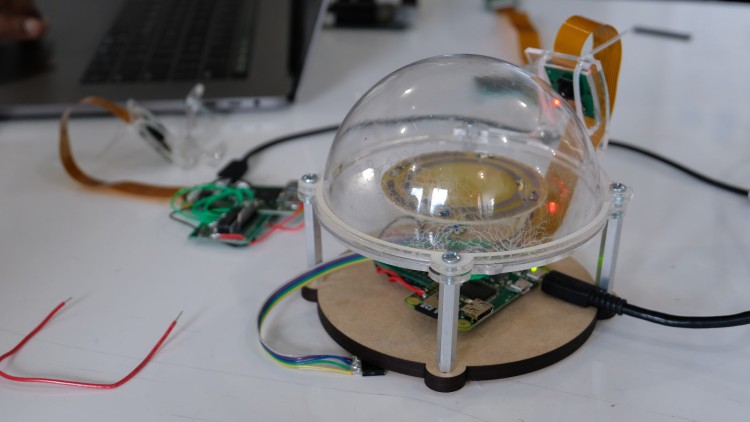
In this AGO x RBC Emerging Artist residency, I aim to explore the factual and speculative relationship between Blackness and cotton using mycelium, science fiction, and bio art practices. I have always been distressed and moved by the historical imagery of enslaved Black people standing around pits of picked cotton during the Transatlantic Slave Trade (see images here and here). These photographs and illustrations are haunting and the social ecologies at play impact both human and more-than-human entities. In addition to thoughts around the violence and trauma that my ancestral line endured, I am also left imagining their interactions with the organisms around them; the knowledge my ancestors needed to engage with the potential decomposition of this raw material, the comprehensive understanding of this crop in all its growth cycles, the insects that bacterial fluxes that impacted their tasks and more. To interact with the biomaterial properties of cotton is to engage with millions of organisms both seen and unseen, including the web of mycelium below the cotton pits and beneath the soil.
Mycelium, the root network of a mushroom, is a type of fungi that plays a critical ecological role. It absorbs nutrients, decomposes organic matter, and most notably for this project, facilitates the communication and informational exchange between plants. Similarly to the networked web of the internet, mycelium acts as a kind of Wood Wide Web (a term coined by Suzanne Simard, Professor of Forest Ecology at the University of British Columbia). It helps to balance ecosystems, linking the needs of various plant matter together. These fungal networks are over two billion years old and are known to span thousands of acres.
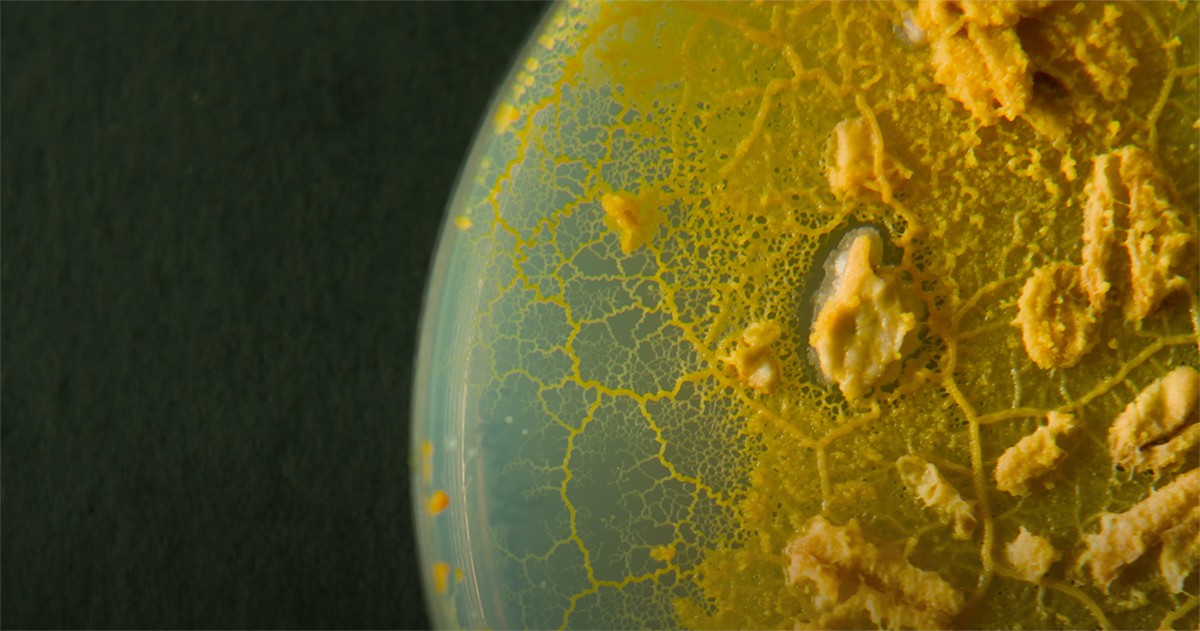
I have spent many years exploring the link between this fungal network and these historic images. To explore these ideas further, in 2018 I trained a mycelial strain to consume unbleached natural cotton. This mycelium network, now several years old, decomposes cotton, using it as a nutrient source to sustain its capacity to produce mushrooms and grow from year to year. Using this biomaterial as a living proof of concept, I began a series of science fiction writings and sketches that envision a speculative past in which the Black people in these images communicated with displaced loved ones across plantations using messages sent through the cotton consuming mycelium network below their feet.
In this art and research residency at the AGO I aim to expand on this work, using the museum archives to understand how these Black histories have been creatively disseminated in the past while pushing the material boundaries of what is considered art to include organic matter like soil, cotton, mycelium and plant species. I aim to create artwork that demonstrates these ideas as well as run bio art workshops for the public, exploring multi-modal speculative narratives that reclaim Black history. This Emerging Artist opportunity will enable me to expand my practice based research to include public facing exhibition experience and connect me with a wider range of Black art and science enthusiasts in the city of Toronto.
Maddie Alexander
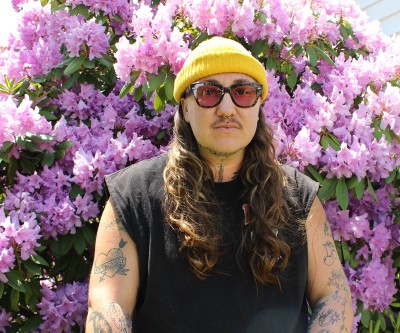
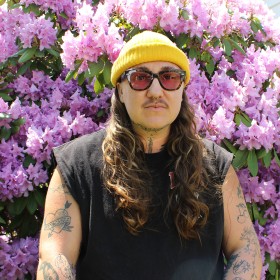
Maddie Alexander is a trans artist, archivist, and arts worker. After graduating with a BFA from OCAD University (2016), he went on to pursue an MFA at NSCAD University (2020). Their work has been exhibited locally and internationally. In support of his artwork, he has received grants from Arts Nova Scotia, and the Canada Council for the Arts. Their practice focuses on lived queer and trans experiences, often through an autoethnographic approach. This is explored through a method of recording, archiving, and dissecting both sourced materials and personal experience. They have always had an interest in methods of translation; and explore this through meshing digital and analog technical processes. This process of translation connects to his personal experience of transness: fluctuating and creating through patchwork to make something that feels real and whole. Currently, their research investigates opening dialogue around access to care for trans folks. He is interested in examining the barriers we face, both contemporarily and historically. This work is rooted within their own personal experiences accessing care.
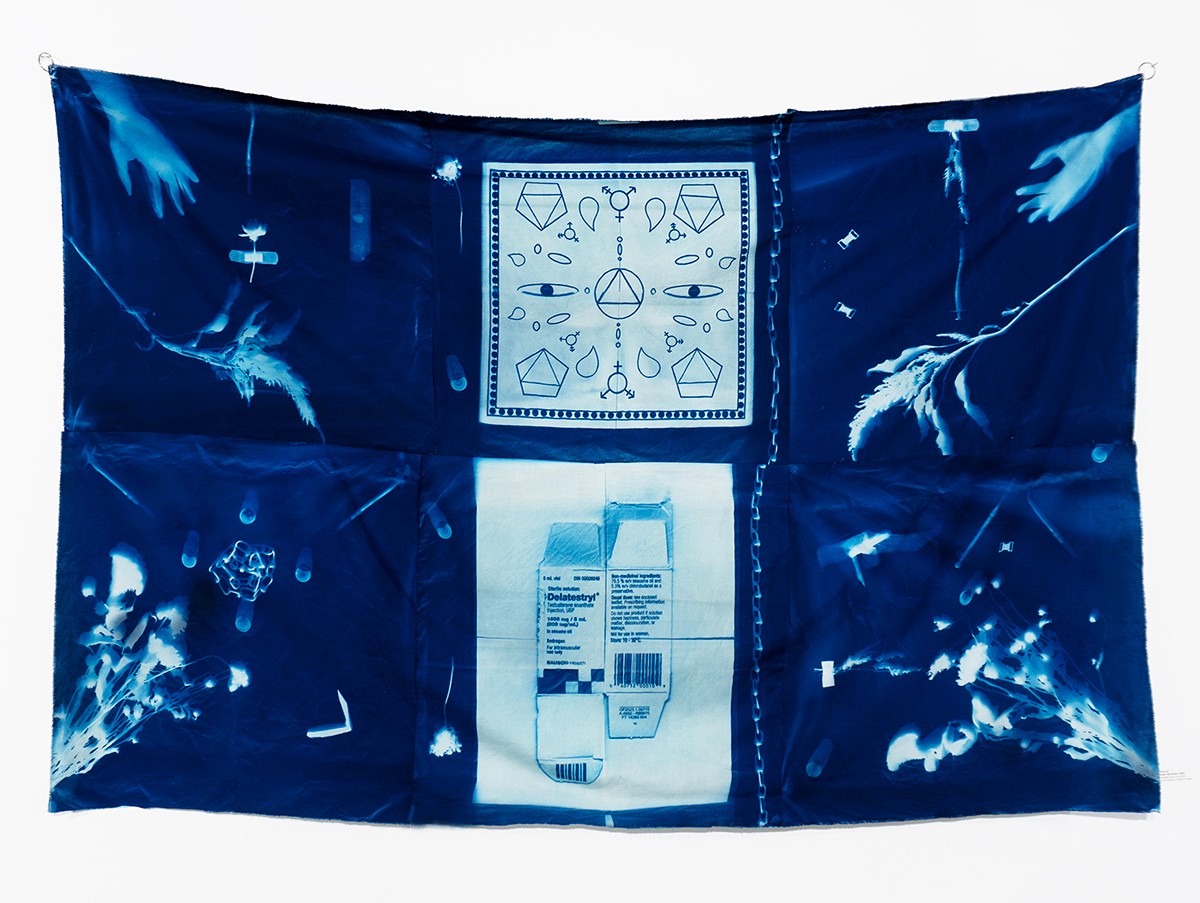
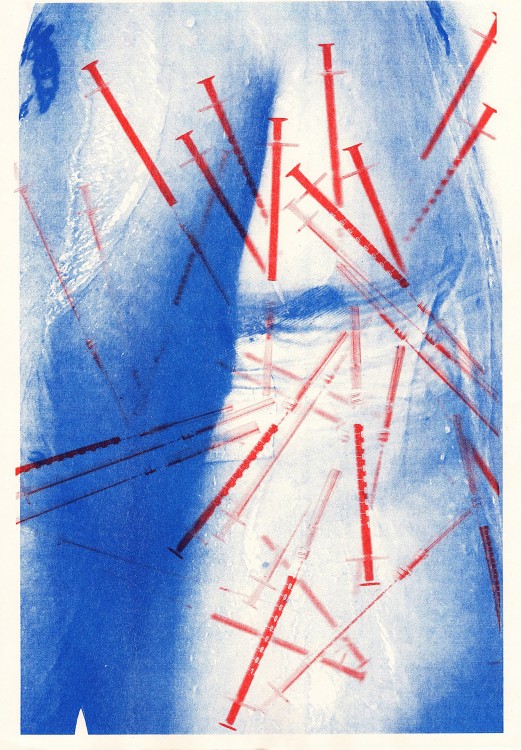
Image courtesy of Maddie Alexander
Their research proposal is to begin a project titled The “Real Life” Test which explores notions of burnout for trans folks in the face of accessing gender affirming care. The “Real Life” test was developed as a part of the 1980’s HBIGDA guidelines which stipulated that in order for trans folks to access gender affirming care, they must provide documented proof of living in their “chosen” gender for 2 years. This project will explore how different diagnostic tools are implemented to gatekeep trans people from accessing life-saving care, highlighting the ways in which trans folks are forced to perform a version of transness for cis audiences in exchange for safety and care.
Nima Navab
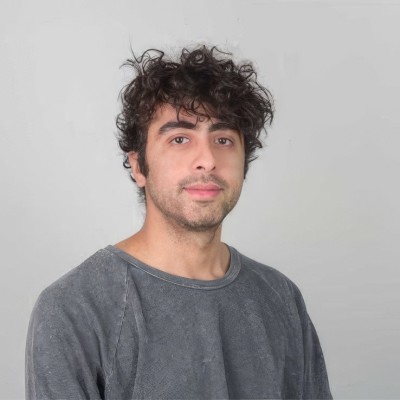
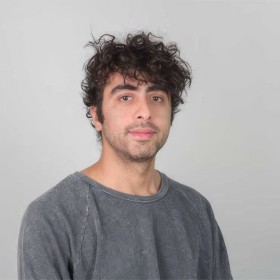
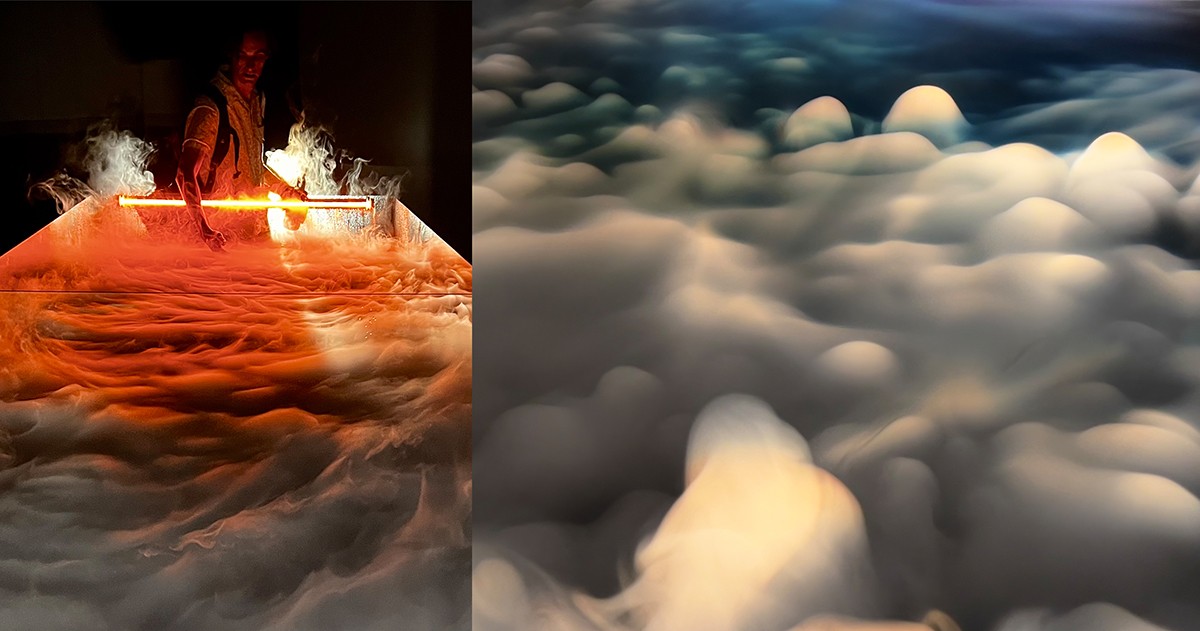
Nima Navab is an Iranian-Canadian media artist based in Tiohtià:ke/Montreal. Working at the intersection of art, science, and engineering, his practice engages the ephemeral and elemental through mediums such as mist, air, temperature, and light. These immersive, trans-meditative installations visualize invisible phenomena, including thermal gradients, airflow, and acoustic resonance, while foregrounding the body’s sensory intelligence to its environment. Recent projects, including Dissipative Topologies and Thermal Tapestries, investigate thermodynamic systems through controlled instability and atmospheric choreography. Drawing on shadowgraph techniques, fluid dynamics, and kinetic instrumentation, Navab reveals the subtle material rhythms that shape everyday life. At its core, his practice is a commitment to slowness, attention, and perceptual liberation in a world that is overstimulated.
The research investigates how institutional infrastructures, particularly those at the AGO, can support works like Dissipative Topologies, which behave as living systems in dialogue with space, people, and climate. The project forms evolving thermal patterns through the precise modulation of temperature, moisture, and airflow, making the surrounding architecture inseparable from the work’s unfolding behaviour. This research will explore precedents within the AGO’s collection and curatorial history, installations that invited slowness, subtle perception, or thermodynamic instability into the viewing experience while also examining how the gallery’s spatial and curatorial frameworks can accommodate works rooted in emergence rather than fixed form. This opportunity is also about learning how to navigate the public sphere as an early-career artist while preserving the integrity of the fragile systems created. Technical and conceptual aspects will be addressed through supplementary documentation, allowing this research phase to focus on curatorial, spatial, and infrastructural integration.
PAST ARTISTS-RESEARCHERS
2024
Artist-Researchers 2024: Delali Cofie, Raha Alipourfard, Neo Chen.
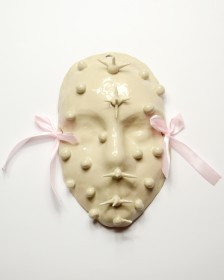
2023
Artist-Researchers 2023: Patricia Ellah, Gloria Wong and Yantong Li and Beichen Zhang.
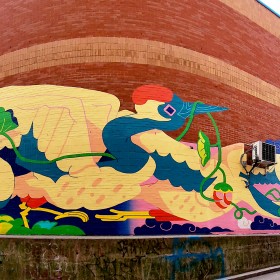
2022
Artist-Researchers 2022: Wenting Li, Gwenyth Chao and Anahi Gonzalez.
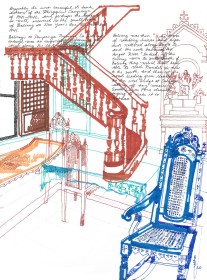
2021
Artist-Researchers 2021: Bianca Weeko Martin, Krystle Silverfox and Alessandra Pozzuoli.
Be the first to find out about AGO exhibitions and events, get the behind-the-scenes scoop, and book tickets before your visit.
Sign up to get AGO news right to your inbox. You can unsubscribe at any time.
Sign up to get AGO news right to your inbox. You can unsubscribe at any time.